Start with one object, not the whole room
If your group likes history but finds a room of ceramics intimidating, make the visit smaller. Choose one object that catches your attention and ask what you can actually see before trying to remember every date. These are suggested conversation prompts, not an official guided tour or a claim that we have personally tested the route.
ACM presents the Tang Shipwreck in the Khoo Teck Puat Gallery as part of its maritime-trade story. The collection connects ninth-century cargo with exchange between regions. That is a useful theme to carry into the room: objects can tell a trade story as well as being beautiful.
Question one: what might the shape have helped someone do?
Before reading an interpretation, notice the opening, base, handle or spout. Would you describe it as a bowl, a container or a pouring vessel? Compare your first impression with the museum's label. Changing your mind after reading is part of looking, not a failed quiz.
Keep visible features separate from a story you invent. A spout can prompt a question about pouring, but its shape alone does not identify the exact person who used it, what they drank or their daily routine. Let the curatorial information set the boundary.
Question two: what repeats, and what changes?
ACM's overview places Changsha wares alongside finer ceramics from other production centres. Rather than trying to rank everything by price or rarity, look for similarities and differences in form, colour and decoration. What would you compare if you had to describe two pieces without pointing at them?
For an online warm-up, Roots records an ACM bowl with a cloud motif, accession 2005.1-23848, from the Changsha kilns around the 830s. Its description connects variation in painted patterns with different artists. Read that record as a specific example, not as permission to call every curling mark a cloud or proof that this exact bowl is on display today.
Question three: which part is evidence, and which part is a possibility?
Museum explanations sometimes use cautious language because an object survives without a complete account of its maker or buyer. Notice words such as 'probably' or 'possibly' instead of silently turning them into certainty. You can leave a display with a better question rather than a complete answer.
Try a two-line note: 'I can see…' followed by 'The label suggests…'. For example, you might describe a repeated motif first, then record the interpretation given beside it. This is a suggested exercise, not a quotation from a visitor or a claim that a motif has one universal meaning.
Make room for different interests in the same visit
One person may enjoy drawing a shape, another comparing materials and another following a trade connection. Choose a small shared focus and then discuss what each person noticed. If someone is not interested in objects or close reading, a museum should not become an obligatory tick-box simply because it is well known.
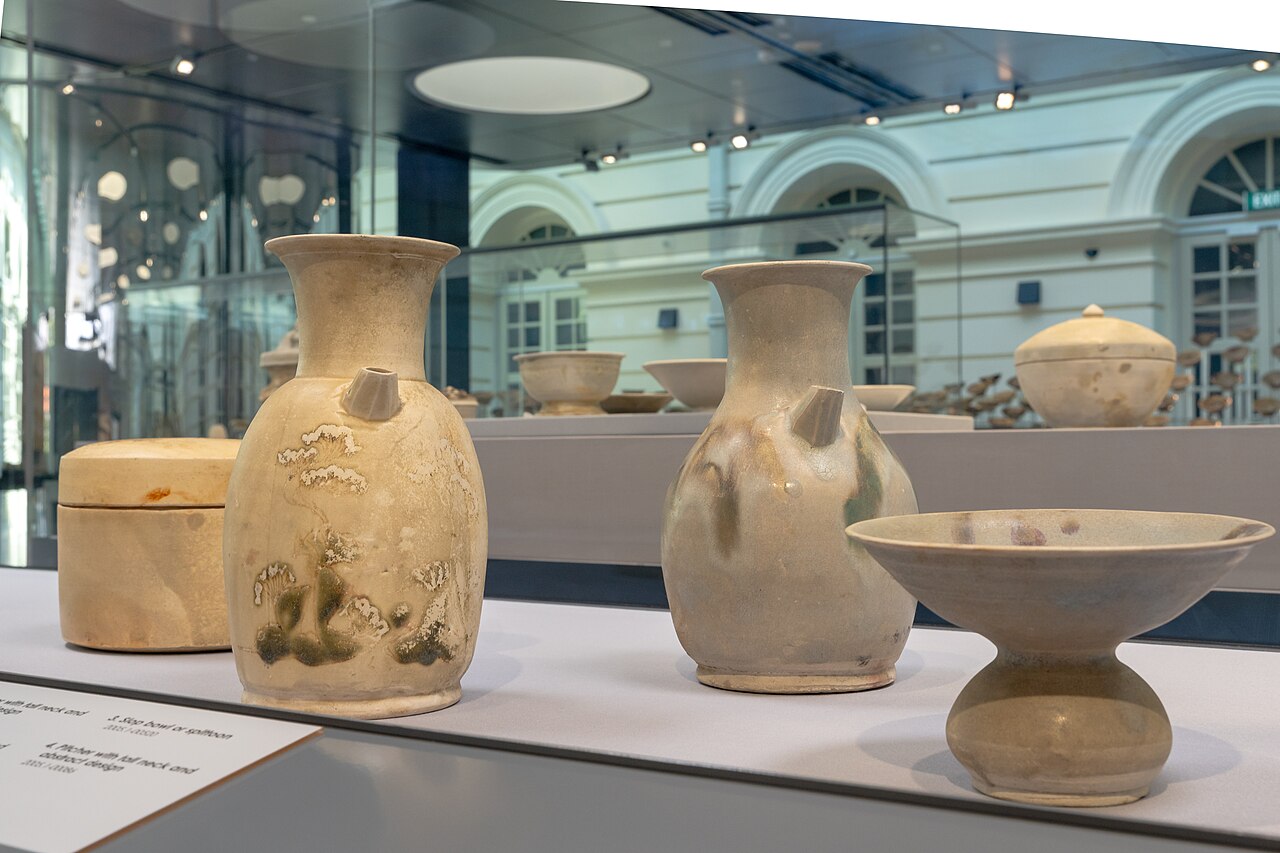
The image above shows a historical ceramics display photographed in 2023. Current arrangements can change. Use the official gallery information and confirm the admission and access relevant to your date; do not build a schedule around our photo or assume that an online collection record means an object is currently exhibited.
About the photograph
Historical gallery photograph: Rainer Halama / Wuselig, 24 August 2023; Commons CC0 1.0 dedication. Commons-resized JPEG unchanged, responsive crop. Not a current display survey or a photograph of the cloud bowl discussed in this guide.
Arrange the journey after choosing the visit
For a Malaysia-origin outing, settle the museum purpose and date before discussing the real pickup and Singapore destination through our route or contact page. Admission and road transport are separate arrangements; this guide does not reserve tickets or promise an arrival time. Sources were checked on 30 October 2026.
Sources and photograph credit checked on 30 October 2026

Details to send on WhatsApp
- Your Malaysian pickup area and travel date.
- The confirmed museum destination or public meeting point.
- Your requested return arrangement, with availability and fare confirmed separately.
Related route pages
WhatsApp quote
Send your Malaysia to Singapore trip details
Final fare and vehicle arrangement are confirmed by WhatsApp before booking.
Ask about this guide