A small object can make a satisfying cultural stop
If someone in your group enjoys sewing, clothes or small-scale making, the Peranakan Museum can offer a more focused aim than trying to remember every room. Follow the work of the hands: what is the surface made from, how is it attached, and what was the finished object for? This is a suggested way to enjoy the visit, not a report of a personal tour.
The museum’s current gallery directory places Decorative Textiles within Level 3’s Style theme. Its scope is wider than attractive clothes: the official description connects needlework with gifts, dress accessories and celebrations in the home. Start with that purpose rather than treating everything as a decorative souvenir.
Beads form the surface; they are not simply a printed flower
For a concrete online example, Roots catalogues slippers numbered 2009-01553 in the Peranakan Museum collection. The record identifies glass beads, canvas, leather and cotton thread, with petit point bead embroidery. In this process, small coloured beads are stitched onto a fabric base. A familiar flower shape can therefore be the result of many individual pieces, not a single printed mark.
When a label identifies beadwork, look from the permitted viewing distance for how the repeated elements build a larger image. Do not touch a surface or lean across a barrier to test it. If you cannot distinguish the method through the glass, let the material and technique fields answer; a photograph’s colour alone cannot settle construction.
An unexpected motif makes a better conversation than a beauty contest
The same Roots record describes roses alongside a cartoon character and dates the pair to the late twentieth century. That combination is a useful reminder not to turn every heritage object into an imagined, very ancient tradition. Read the date and the particular object’s description before supplying a story about its maker.
Try describing what interests you without ranking it: the meeting of familiar and unexpected motifs, the density of the surface, or the relationship between the pattern and the slipper’s shape. Different companions can notice different details. These are conversation ideas, not an official interpretation of every motif or evidence that all Peranakan slippers were made alike.
Follow the object from making to use
The museum’s Decorative Textiles account includes needlework from slippers to bed-curtains and explains its significance in major celebrations, especially weddings. A wearable object and something used to dress a room can share skilled work but have different jobs. Look for the label’s explanation of who used an object and in what setting, rather than assuming every elaborate piece was ordinary everyday wear.
If your interest is broader fashion, the neighbouring gallery themes offer another direction. If it is the making process itself, keep a note of a technique you would like to learn about later. Seeing a museum display does not book a workshop, provide materials or guarantee an activity for children. Those require a separately confirmed programme.
A collection page is a useful preview, not a promise of today's cabinet
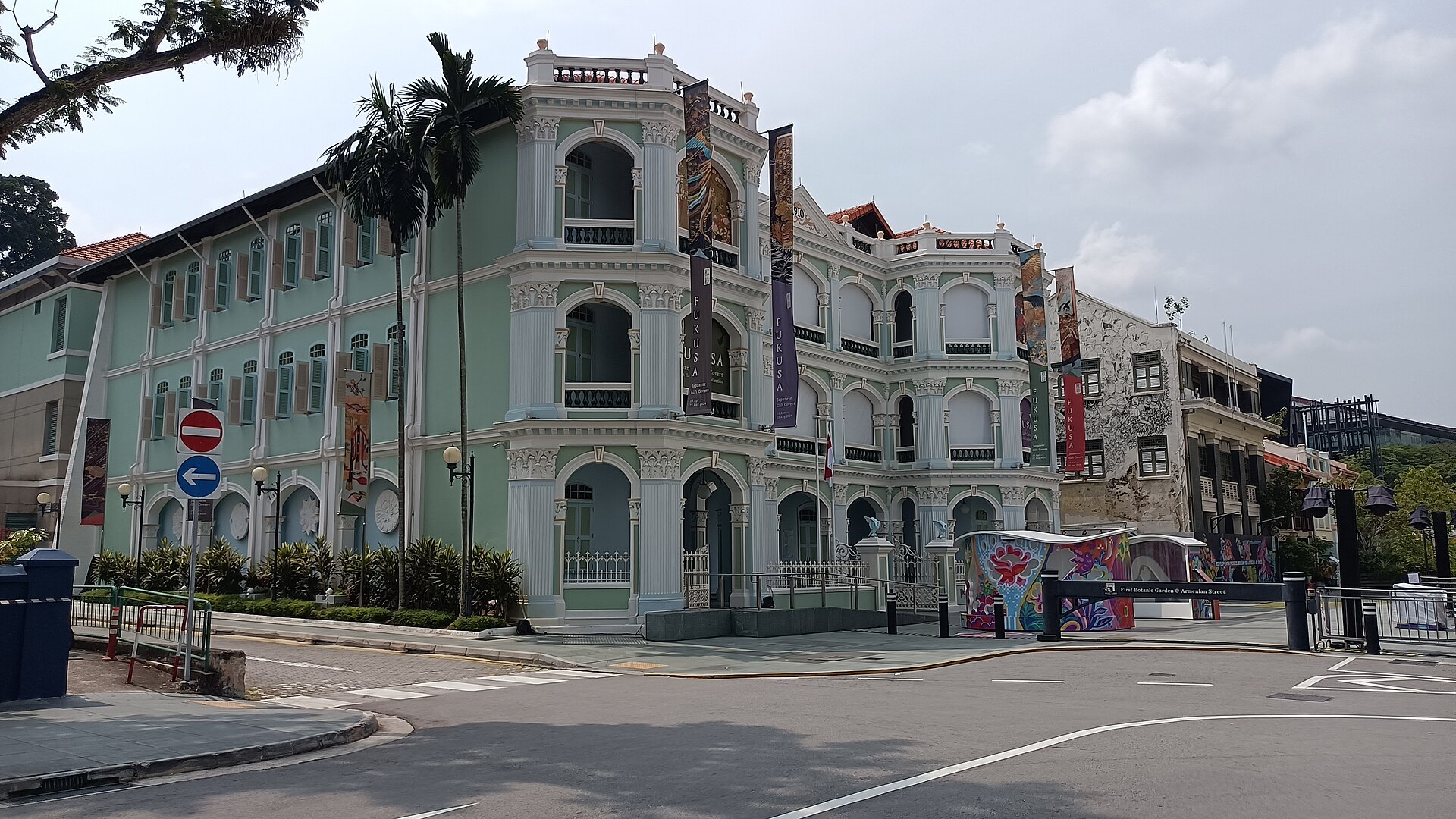
The slippers record above is an online collection example. We have not confirmed that this exact pair is currently on display. Check the museum’s current galleries, visitor information and any notices for your date; ask staff if seeing a particular object is essential. Our exterior photograph was taken in 2024, so its banners are not a current exhibition calendar.
This stop suits people happy to look closely and discuss craft. It is not a substitute for a shopping appointment or a hands-on class. Choose a manageable focus rather than promising everyone that they must love the same object.
Photograph and attribution
Historical museum exterior: GoAheadFan95, 26 August 2024, CC BY-SA 4.0. Original JPEG unchanged; responsive display crop. Banners and street arrangements are historical, not today's exhibition or a designated car pickup point. The photograph source and licence are linked below; no museum or photographer endorsement is implied.
Keep the museum visit and the road journey separate
From Malaysia, settle the intended museum visit first, then send the real pickup area, date and Singapore destination through our route or contact page. Museum admission, programmes and road transport are separate arrangements. Confirm any return plan and final fare rather than assuming a driver waits during the visit. Official gallery and collection information was checked on 31 October 2026; this guide does not guarantee an arrival time.
Official references and photo credit checked 31 October 2026

Details to send on WhatsApp
- Confirm the current museum visit and any specific object or programme separately.
- Give the actual Malaysian pickup and Singapore destination.
- Confirm the road arrangement and return request before booking.
Related route pages
WhatsApp quote
Send your Malaysia to Singapore trip details
Final fare and vehicle arrangement are confirmed by WhatsApp before booking.
Ask about this guide